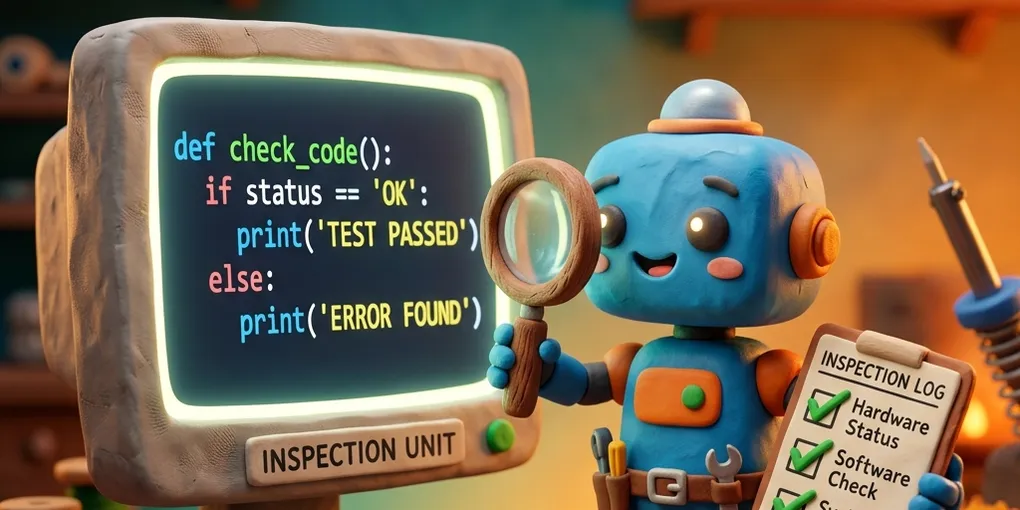
AI coding agents have revolutionized how we write software, but their speed can be a double-edged sword if code quality isn’t maintained.
What is continuous verification?
The biggest risk of vibe coding is the Accept-Commit cycle. AI writes code, the developer reviews the UI visually, thinks “it looks good,” accepts it, and pushes it to production. Later, users encounter broken routes, runtime type errors, or layout shifts.
To build reliable software with AI, you must integrate continuous verification into your prompt pipeline.
How does static typing act as an AI guardrail?
Use languages and tools with strong type systems (like TypeScript, Rust, or Go). When type boundaries are defined, the compiler acts as a strict verification guardrail. If an AI agent refactors a file and breaks a dependency, the compiler fails immediately.
By feeding compiler or lint errors back into the agent (e.g., “Fix this typescript error: Property ‘id’ does not exist”), the AI has the exact feedback it needs to correct itself.
Why are pre-commit audits necessary for code quality?
Always run verification tools automatically before building:
tsc --noEmitornpx astro checkto verify types.npm run testor Vitest to verify logic.eslintto verify code format.
By automating verification, you turn the compiler into the final auditor of your AI-generated code.
How do you integrate verification into agentic workflows?
To achieve stable deployments, developers should combine verification tools with prompt orchestration constraints and context window management to ensure the agent only receives relevant, valid code inputs.
Sources
- TypeScript, TypeScript Documentation and Types, retrieved 2026-06-17.
- Vitest, Vitest Testing Framework Guide, retrieved 2026-06-17.
- Astro, Astro CLI and Check commands, retrieved 2026-06-17.